It is time to stop the unfair prices that hurt the most needy.
It costs more
The policy of “Buy 2″ (or 3 or 4) to save money means that the disadvantaged must buy more than one in order to save money on the item. Otherwise they are charged MORE than everyone else. This amounts to a grocery levy on the POOR.
Stores love to offer volume or multiple pricing. In fact some have signs say “multi value”. That’s because they move two to three times more product through the cash register in a single transaction. It’s simply good business.
We know these types of prices have a strong appeal to families – especially large families because they save money as they buy larger quantities to feed their families.
However, multi-pricing discriminates against the people who need the “savings” most – the elderly (especially pensioners), the handicapped, the poor and the homeless – the real disadvantaged in society.
A challenge to carry
The transport of the items is a second problem.
If you own a car, it is not much trouble to throw a few extra items in your trunk to get them home.
But not so for the elderly or the person in a wheelchair who now has two packages of pasta and two bottles of pasta sauce and two pizzas and two boxes of cereal and two tubs of ice-cream and two loaves of bread and two or three of whatever else – to carry home. It is because they are trying to stretch their pennies and live as economically as possible on their old age or disability pension. It’s equally challenging for the homeless who happen to walk or ride a bicycle to the local store. And the person earning minimum wage must now carry twice as many groceries on public transit – making the trip twice as awkward. You can see the picture – it’s a bigger challenge for some.
Where to put it all
Not only is the extra cost a problem, but the storage of the product also creates an issue for some (especially the homeless and those living in small spaces).
Perhaps someone is fortunate enough and can afford to buy two-at-a-time. They have budgeted smartly and will have enough groceries to last them for awhile. But what happens when they arrive home.
These same people often live in very small homes or no homes at all. Now instead of buying one can of soup which they might eat today, or in a few days – if they want to save money – they must buy two and find storage for the extras in very tight living quarters, or maybe in a tent if they are homeless. The poor do not have large kitchens with huge pantries, fridges and freezers. They are usually living in small places with very little cupboard space and minimalist appliances.
The goal is to EXPOSE and STOP unfair prices that hurt the disadvantaged because it is a discriminatory policy.
You can help:
- Send examples of unfair prices at stores where you shop.
- Tell your lawmakers to stop these practices.
DISCRIMINATORY POLICY
Discriminatory laws or practices are unfair because they treat one group of people worse than other groups. […]
A policy is a set of ideas or plans that is used as a basis for making decisions, especially in politics, economics, or business. […]
Source – Definition of discriminatory policy from the Collins English Dictionary
My Personal Story
I became aware of these discriminatory practices during the pandemic when I was trying to shop less often. I would try to stock up on items that I knew I would use over time. I saw that the stores often had “two-for” prices and that I could save money as well as stock the pantry.
However as an elderly person, I also found that my bags were getting more difficult to carry because I was buying everything in volumes of two or three at a time. Since I walk to my local store this became a challenge.
Then came my next problem – where to put all this extra food when I got home. We live in a very small apartment and there was no room in my kitchen cupboards for all of these extras. So I found myself storing the overflow in boxes in the dining room.
At the same time, I lost my job. I was now back to living on my pension. So now I was aware that I needed to shop carefully to make sure I didn’t go over my budget. So, buying multiples of items made sense – even if it did cause me an inconvenience in transport and storage.
It was then that I realized that many others in society do not have as much as I do – as much money, as much space and as much flexibility. I began to wonder – how can they buy “twofers” in order to save money. And the “disadvantaged” certainly need to save money even more than I do.
I realized that the two or three (or four) pricing strategies that retailers employ are good for them – but not good for society. They move more product – faster. If individuals can only afford to buy in single items – for financial or convenience reasons- they have to pay more for that product than others do.
And as I studied the issue, I noticed that what seems like a small savings can turn into a substantial increment on some items. This doesn’t seem fair to me. In fact these prices discriminate against anyone who cannot afford to buy more than one, or people who would be physically disadvantaged or at risk if they did.
Here are a few examples from a recent shopping trip (March 4, 2023):
| Multi pricing | Single pricing | $ Difference | % higher for a single |
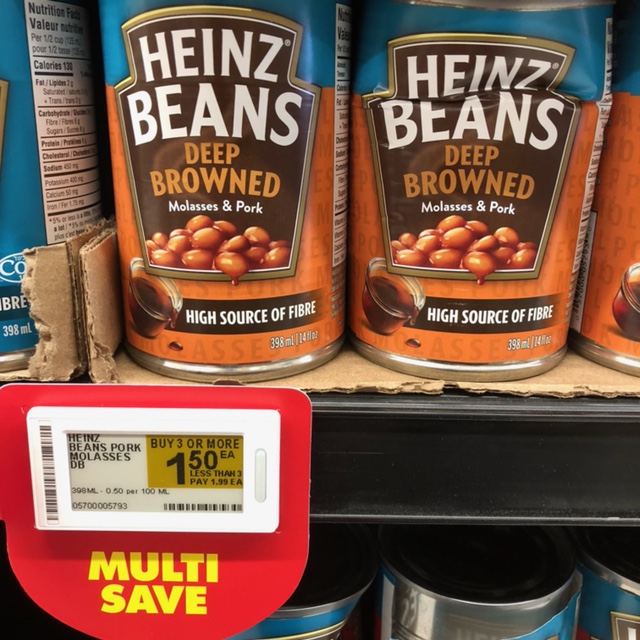
| Baked Beans – 3 cans at $1.50 each | $1.99 | .49 | 34 |
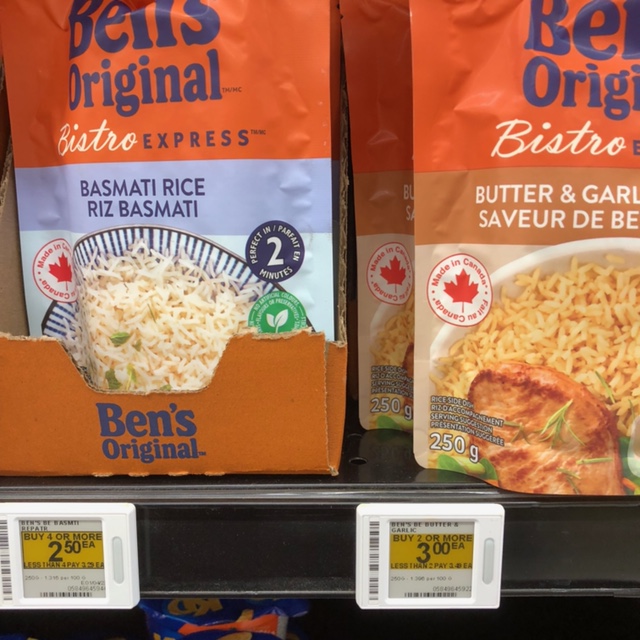
| Uncle Ben’s Rice – 2 packages – $3.00 each | $3.49 | .49 | 16 |
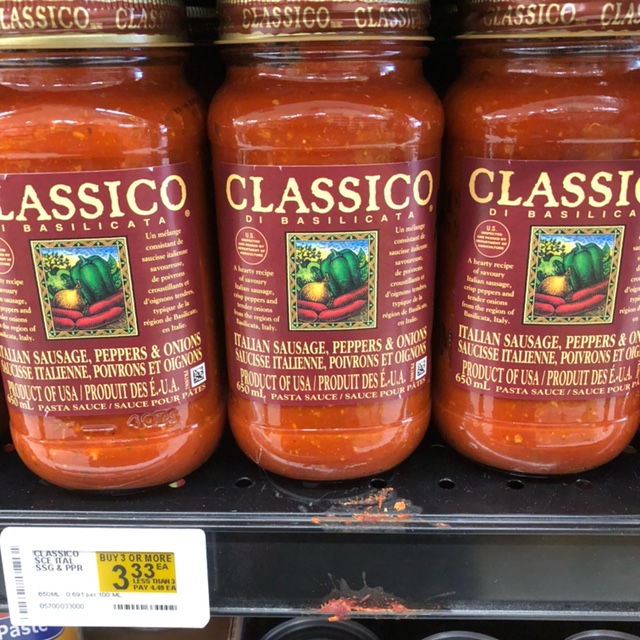
| Classico Pasta sauce – 3 for $3.33 each | $4.49 | 1.16 | 35 |
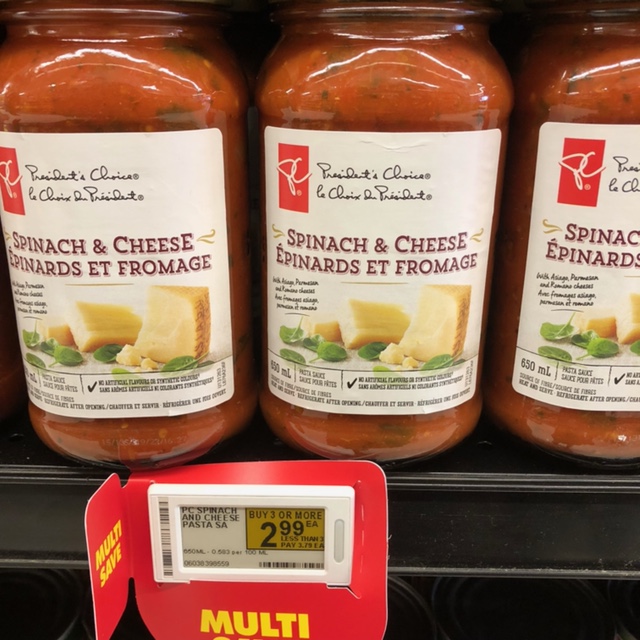
| PC Pasta Sauce – 3 for $2.99 each | $3.79 | .80 | 27 |
| Bacon – 2 for $7.50 each | $7.99 | .40 | 6.5 |
So the poor or the homeless person is most likely to buy the can of beans – because that is all that they can afford – and pay 34% more for each can than the person who bought three.
And the elderly lady who cannot carry the weight of three jars of pasta sauce (an additional 4 lb. for the extra two) on her walk or bus-trip home will have paid 27 to 35 % more for her single jar than the person who could throw 3 jars into her SUV in the parking lot.
And the disabled person who likes the convenience of a quick meal of Uncle Ben’s rice will pay at least 16% more since they bought only one package instead of two, simply because a single package was all they could manage in the carrier attached to their wheelchair.
Where is the justice in this pricing? How can we make it stop? Send us your ideas. Share these stories.
 unfair pices
You must be logged in to post a comment.